

Neurêkha Dr Rekha Barthélémy

Dr Rekha Barthélémy — Clinical neuropsychologist

A practice grounded in neuroscience and clinical experience.

Let your brainflourish.

Attention, memory, learning, neurodevelopment, acquired cognitive disorders, degenerative disease: I assess, I explain and I support — from childhood to old age.

  • Clinical
  • Research
  • Forensic assessment
  • Science outreach
  • Training

Consultations

From Martinique to the wider world, cognitive health within your reach.

A neuropsychological assessment is not a verdict: it is a map. It shows how your brain — or that of someone close to you — works, where the strengths lie, where the obstacles are, and what to do next. Above all it gives us the starting point for tailoring the support that follows, and building it with you.
  • Initial interview
  • Testing matched to age and to the question asked
  • Results explained in person
  • Written report provided
  • Support over time
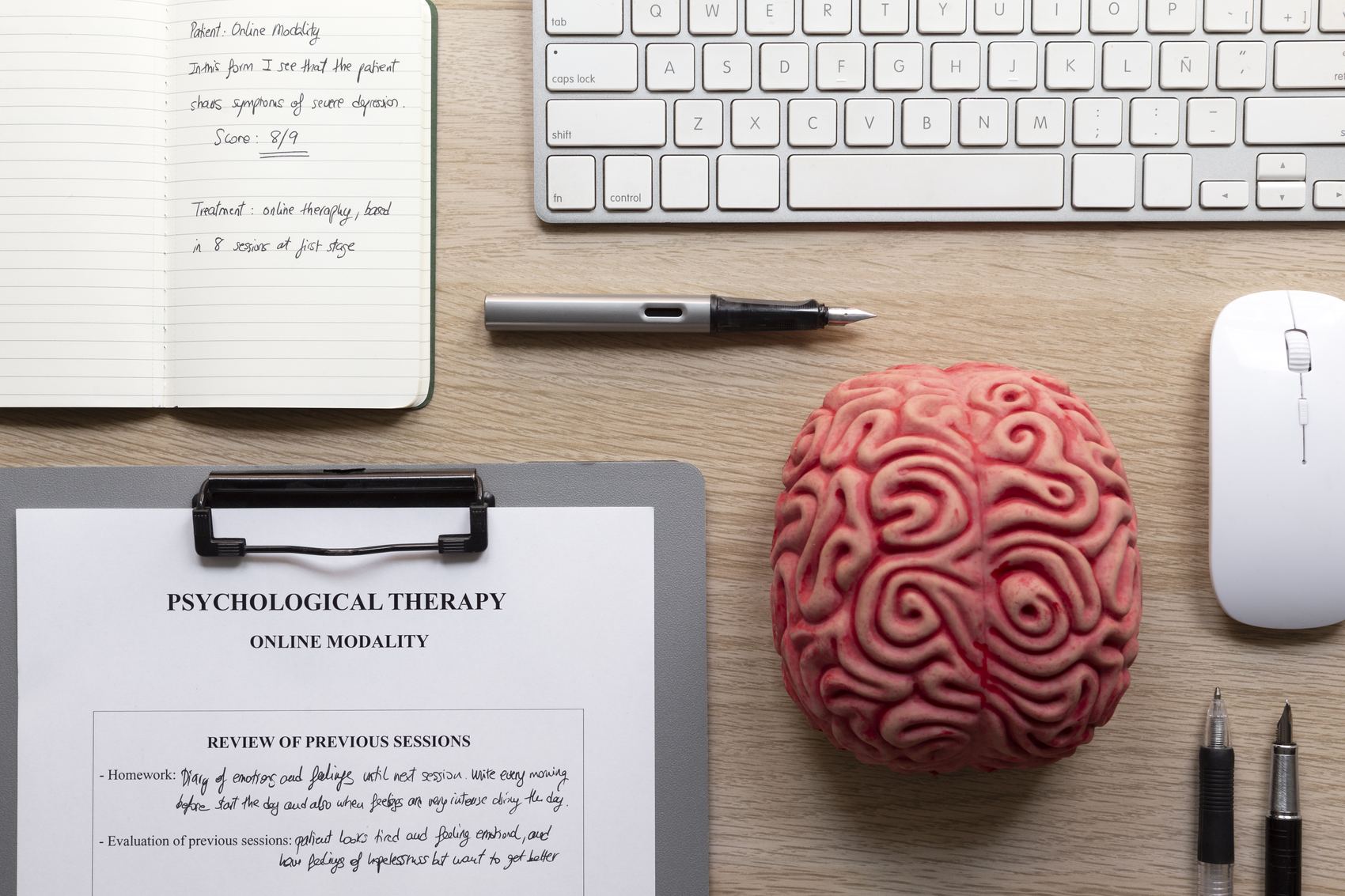
A consulting desk seen from above: notebook, brain model, keyboard and assessment form.

What I offer

Assess, support, intervene.

Understanding is already progress. Every assessment brings clear answers, then concrete solutions: accommodations, strategies, and bearings for the person and for those around them. It is this support — grounded in neuroscience and clinical experience — that turns a finding into real change.

01 Assess

An assessment that answers a precise question.

The starting point: measuring what works, what is limited, and understanding where it comes from.

Children & adolescents

Learning difficulties, attention, memory, language. Identification of ADHD, specific learning disorders, autism spectrum conditions and developmental delay.

Get in touch

Adults & older adults

Memory complaints, stroke or traumatic brain injury, multiple sclerosis, neurodegenerative disease, and cognitive difficulties linked to stress or burnout.

Get in touch

02 Support

Everything opens up once the report is written.

Results become concrete actions, measurable progress and a lighter daily life — for the person and for those around them.

Cognitive rehabilitation

Rehabilitation and stimulation sessions, compensatory strategies, psychoeducation. We work on what gets in the way day to day, not on a score.

Get in touch

Support for relatives

Parent guidance, practical adjustments at home, support for those close by: understanding what has changed, adapting without burning out, putting relief in place.

Get in touch

03 Intervene

When the opinion has to leave the consulting room.

An opinion that holds up before an institution, an employer or a court.

Support for institutions

School and workplace adjustments, job retention, team awareness: the support given to schools, employers and local authorities in adapting a pathway.

See collaborations

Forensic assessment

Assessing performance validity, distinguishing genuine impairment from exaggeration, and producing a reasoned opinion. A practice shaped by a doctorate devoted to response bias, by the law of expert assessment, and by formative experience within a forensic assessment practice in California.

See the research

A question about one of these services, or unsure which would suit you?

Talk it through with me

Patient journey

More than stages: a guided path.

A path designed so that every appointment moves things forward, never a formality: at any moment you know what has just been done, what comes next, and what each conclusion rests on.

  1. 01

    First contact

    You write or call, and I reply within three working days. I take stock of your concerns, check what you need, tell you how I can help, and propose a plan of action.

  2. 02

    Clinical history interview

    An exploration of your history: development, life course, schooling, medical background. It provides the anchor point that will guide the reading of every analysis that follows.

  3. 03

    Assessment session

    The testing itself, one to one. The battery of cognitive tests is chosen according to age and to the difficulty already identified, then adjusted along the way as I observe. From one to several sessions, always at your own pace.

  4. 04

    Feedback and explanation

    After an in-depth statistical analysis of every result and its clinical interpretation, we meet again: with the detailed written report in hand, I answer your questions and propose a plan of action.

  5. 05

    Rehabilitation and ongoing support

    Targeted exercises and compensatory strategies to retrain what can be retrained and work around the rest. Alongside these: school or workplace adjustments, practical recommendations for home, support for the family, and referral to the right health professionals.

Would you like to begin this journey?

Request an appointment

Neurêkha! podcast

The first neuroscience podcast from the French overseas territories.

“A dopamine dealer, ready to inject your dose of serotonin and spice up your curiosity.” Two seasons already, with a third arriving in September. Produced by Tann Audio.

An Apple Podcasts Editors’ Choice in January 2025, the show reached no. 1 in the Life Sciences category on the platform, and made the top 10 in Switzerland, Belgium and Madagascar.

Neurêkha! podcast cover art

Episode 20 · most recent

Mon Cerveau au Masculin

22 min · 22 juin 2026 · saison 2

Season 3 from September

An episode idea, or a collaboration around the podcast?

Contact me

Collaboration

Neuroscience, translated for your field.

Companies, public institutions or local authorities: pick a topic and I will propose a format — workshop, seminar, talk, training or consulting. Sessions are delivered in French or English, in person or remotely, and every format is built around your objectives and your audience.

Training

Team training

Medical, allied-health, educational and social teams: spotting neurodevelopmental disorders, understanding cognitive functioning, and the stance to adopt when supporting someone. From half a day to three days, with clinical cases.

For: healthcare providers, schools, social services, training organisations.

A training need, a talk to schedule, a project needing scientific grounding?

Request a programme

Events

Talks, workshops, exhibitions.

For the general public, families, clinicians, students, companies and professionals, as well as at cultural events — in Martinique and abroad — I share my passion for neuroscience.

26 August 2026
Music & the brain

Music & the brain by TANN

A live-recorded talk-and-performance, staged like a live podcast: “From the power of music in our brains to its impact on our history”. I explain what happens in the brain — why drumming synchronises us — while Valérie-Ann Edmond-Mariette, a doctoral researcher in music history, traces who tried to silence bèlè, biguine and zouk, and who put them to use. Music by Maéliah.

Destination Windies · Martinique Aimé-Césaire Airport, Le Lamentin
Find out more
April – May 2026
Scientific committee

Reconstruction — the astonishing power of the human brain

Member of the scientific committee for this territory-wide exhibition by the Collectivité territoriale de Martinique. Psychological trauma and resilience told in six chapters: each cultural venue hosts one stage of the trail and its own metaphor, from the survival reflex to the power to act.

  1. 01Survival and safetyCDST, Saint-Pierre · 10 – 30 April
  2. 02Reorganisable memoryTerritorial Archives, Fort-de-France · 15 April – 7 May
  3. 03Expression and reconsolidationCentre Tangamen, Basse-Pointe · 20 April – 30 May
  4. 04Narrative reconstructionBibliothèque Schœlcher, Fort-de-France · 21 – 30 April
  5. 05Plasticity and reorganisationMusée du Père Pinchon, Fort-de-France · 4 – 30 May
  6. 06Resistance and agencyMaison de la Canne, Trois-Îlets · 4 – 30 May
18 March 2026
Brain Awareness Week

Reconstruction — a talk on shock and resilience

An immersive talk given as part of Brain Awareness Week (16 – 22 March), alongside Dr Juliette Labyt, psychiatrist. The trauma circuit, neuroplasticity and the road to resilience — scientific explanation and storytelling, followed by a long exchange with the audience.

Bibliothèque Schœlcher · Fort-de-France
The CTM write-up
22 juillet 2025
Soirée grand public

Soirée Brain Game

An evening of brain games, open to all: riddles, quizzes and cognitive challenges to test memory, attention and logic — and to understand, through play, how it all works.

Centre commercial Le Rond-Point · Martinique
Watch the recap
13 novembre 2025
Table ronde

Dubai Arbitration Week 2025

Dubai Arbitration Week 2025

A panel on arbitrator independence: the unconscious biases a decision-maker may carry, and the effect of business and social ties on judgement. I spoke to the psychological side, alongside Rupert Reed KC, Karim J. Nassif and Alain Farhad, moderated by Cesar Ghaleb.

Ritz-Carlton DIFC · Dubai, United Arab Emirates
Find out more
1 February 2025
Parent workshop

Understanding and supporting adolescents facing depression

A talk for parents, with Joëlle Najm, school psychologist. Spotting the signs, opening the conversation, knowing when and where to refer.

Lycée Français Jean-Mermoz · Dubai
Find out more
20 November 2025
Talk

Autism Beyond the Obvious: Understanding Mild and Subclinical Profiles through a Neuropsychological Lens

French title: L’autisme au-delà de l’évident

The quieter presentations of autism spectrum conditions — those spotted late, or never — and what neuropsychological assessment can reveal about them.

Hoopfull · online
Find out more

This list gathers publicly documented engagements. Are you organising a study day, a festival, a training course? Write to me

Are you organising a study day, a festival, a public event?

Propose an engagement

Doctoral thesis, 2018

Les biais de réponse en neuropsychologie : de l’évaluation à l’identification. Université de Lille, laboratoire SCALab (UMR CNRS 9391).

Reference: 2018LILUH031

View the thesis

Peer-reviewed journal articles

  1. Barthélémy, R., Lenne, B., Hautecœur, P., & Antoine, P. (2014). Simulation des troubles cognitifs : aspects conceptuels et méthodologiques. [Malingering of cognitive disorders: conceptual and methodological aspects.] Revue de Neuropsychologie, 110–116.
  2. Lenne, B., Barthélémy, R., Nandrino, J.-L., Sequeira, H., Pinti, A., Mecheri, H., et al. (2014). Impaired recognition of facial emotional expressions in Multiple Sclerosis. Neuropsychological Trends, 67–83.
  3. Lenne, B., Barthélémy, R., Mecheri, H., Nandrino, J.-L., Sequeira, H., et al. Is the Paced Auditory Serial Addition Test (PASAT) a valid tool for assessing cognitive disorders in multiple sclerosis ? The Clinical Neuropsychologist — submitted in 2019.

Conference papers with published proceedings

  1. Barthélémy, R., Lenne, B., & Antoine, P. (2018). Could cognitive impaired patients malinger such as healthy individuals ? 16e congrès annuel de l’American Academy of Clinical Neuropsychology, San Diego. The Clinical Neuropsychologist, 32(4).
  2. Barthélémy, R., Lenne, B., & Antoine, P. (2018). Would malingering be the same on a mnesic, an executive or attentional task ? 16e congrès annuel de l’AACN, San Diego. The Clinical Neuropsychologist, 32(4).
  3. Barthélémy, R., Lenne, B., & Hautecœur, P. (2018). Pratiques de réhabilitation cognitive dans la sclérose en plaques. [Cognitive rehabilitation practices in multiple sclerosis.] 22es Journées de neurologie de langue française, Bordeaux. Revue Neurologique, 174(S1), S155.
  4. Barthélémy, R., Lenne, B., & Antoine, P. (2017). Is minimal effort effortless ? A qualitative analysis of response bias on memory assessment. 69e congrès annuel de l’American Academy of Neurology, Boston. Neurology, 88(16 S), P6.309.
  5. Barthélémy, R., Lenne, B., Hautecœur, P., & Antoine, P. (2017). Normalisation du Rey Dot Counting Test en population clinique francophone. 21es Journées de neurologie de langue française, Toulouse. Revue Neurologique, 173(S2).
  6. Barthélémy, R., Lenne, B., Leuse, D., Mecheri, H., Kiatkowski, A., & Hautecœur, P. (2014). Caractère prédictif du déficit dysexécutif sur le déficit en mémoire épisodique dans la sclérose en plaques. 18es JNLF, Strasbourg. Pratique Neurologique – FMC, 5(2), 83–176.
  7. Barthélémy, R., Lenne, B., Leuse, D., Mecheri, H., Kiatkowski, A., & Hautecœur, P. (2014). Predictivity of executive functions in episodic memory in multiple sclerosis. 66e congrès annuel de l’AAN, Philadelphie. Neurology, 82(10 S), P4.168.
  8. Barthélémy, R., Lenne, B., Leuse, D., Mecheri, H., Kiatkowski, A., & Hautecœur, P. (2014). Predictivity of executive functions in episodic memory in multiple sclerosis. Congrès conjoint ACTRIMS–ECTRIMS, Boston. Multiple Sclerosis Journal, 20(S1), 511–534.

Conference presentations

  1. Barthélémy, R., Lenne, B., & Antoine, P. (2018). Biais de réponse : quel rôle de la métacognition et des fonctions exécutives ? Communication orale, Réunion du Club Expertise, Marseille.
  2. Barthélémy, R., Lenne, B., & Antoine, P. (2017). Analyse qualitative du biais de réponse sur tâche mnésique en populations clinique et générale. Journée doctorale SHS, Lille.
  3. Barthélémy, R., Lenne, B., & Antoine, P. (2016). Aspects qualitatifs du biais de réponse sur une tâche mnésique en population clinique. Société de neuropsychologie de langue française, Paris.
  4. Barthélémy, R., Lenne, B., & Antoine, P. (2016). Aspects qualitatifs du biais de réponse en population neurologique. Journées scientifiques des jeunes chercheurs, Lille.
  5. Barthélémy, R., Lenne, B., Leuse, D., Mecheri, H., Kiatkowski, A., & Hautecœur, P. (2014). Caractère prédictif du déficit dysexécutif sur le déficit en mémoire épisodique dans la sclérose en plaques. Journées cognition du Club francophone de la SEP, Nice.

Work citing this research

  1. Minguet, L. (2023). Vitesse de réponse et simulation de troubles cognitifs. [Response speed and malingering of cognitive disorders.] Master's dissertation in psychological sciences, Université de Liège. Draws on Barthélémy et al. (2014) for the conception of response bias as a continuum and for the appraisal of symptom validity tests.

This section lists only citations checked one by one in the text of the works concerned. An export of citations (Google Scholar, ResearchGate) would complete it at once.

Collective work

  1. Member of the forensic neuropsychology working group de la Société de neuropsychologie de langue française (SNLF).
  2. Contribution to the French adaptation of the IOP-29, as part of an international collaboration.

Compiled from the reference curriculum vitae. Work published after 2020 is not yet included: send a ResearchGate or Zotero export and it will be added.

A scientific collaboration, a review, a research project?

Discuss it

The notebook

Understanding your brain, simply.

Short briefings on cognitive functioning, memory, attention, executive functions, development and ageing, as well as on support — to guide you through your own cognitive health.

Signposts

Failing memory: when should you worry?

Forgetting an appointment is not alarming in itself. What matters is repetition, day-to-day disruption and what those close to you notice. Three simple signposts for knowing when to seek advice.

Childhood

ADHD: what an assessment actually measures

An assessment is not looking for a “disruptive” child. It measures sustained attention, inhibition and working memory — and separates what stems from a disorder from what stems from context.

Carers

Supporting without burning out

Supporting someone whose brain has changed takes energy, and above all relief. What research says about carer burden, and what actually helps.

A topic you would like to see covered?

Suggest a topic

Background & expertise

More than a decade exploring the brain, in multicultural settings.

A clinical neuropsychologist of Martinican origin, with a PhD in neuropsychology. I learned this profession on neurology wards, taught it at university, and now share it with the widest possible audience.

Professional experience Education

  1. Since 2020

    General Manager, Medical Director & Neuropsychologist

    CEMEDIPP — Centre médical et psycho-pédagogique · Dubai, United Arab Emirates

    General management — business development and partnerships, human and financial resources, operations, supervision of the administrative team, and coordination of the clinical team and the care pathway.

    Clinical — neuropsychological assessment of children, adolescents and adults, cognitive rehabilitation, family guidance and interdisciplinary coordination of follow-up.

  2. 7 years

    Neuropsychologist — neurology department

    Saint-Vincent-de-Paul Hospital · Lille, France

    Assessments in general neurology and in the memory clinic: multiple sclerosis, stroke, traumatic brain injury, ADHD, and support through neurodegenerative disease. Clinical research (NILVAD, BICAMS) and supervision of trainees.

  3. 7 years

    Neuropsychologist — MS & Parkinson's unit

    PARCSeP — plateforme régionale · Lille, France

    Assessment and support for patients and families, coordination of the mental health pathway, and talks for the public and for clinicians.

  4. 7 years

    Lecturer in psychology and neuroscience

    Institut catholique de Lille · Lille, France

    Cognitive psychology, psychometrics, statistics, forensic neuropsychology, neuroscience of neurodegenerative disease, psychopathology of MS and Parkinson's.

  5. Doctorate

    PhD in neuropsychology

    Université de Lille, SCALab laboratory (UMR CNRS 9391) · Lille, France

    Thesis on response bias in neuropsychology: from assessment to identification.

  6. University diploma

    Law diploma in forensic expertise

    Université Pierre-et-Marie-Curie · Paris, France

    The legal framework of expert assessment, alongside clinical training.

  7. Master’s degree

    Master's in neuropsychology

    Université de Lille · Lille, France

    Specialising in cognitive rehabilitation and peri-surgical assessment.

  8. Bachelor’s degree

    Bachelor of Arts in Psychology

    University of California · Santa Barbara, USA

  9. Undergraduate degree

    Psychology degree, minor in neuropsychology

    Université Victor-Segalen · Bordeaux, France

My areas of expertise

  • Neuropsychological assessment
  • TDAH
  • Specific learning disorders
  • Autism spectrum conditions
  • General neurology
  • Neurodegenerative disorders
  • AVC
  • Traumatic brain injury
  • Cognitive rehabilitation
  • Cognitive stimulation
  • Parent guidance
  • School accommodations
  • Workplace adaptation
  • Cognitive ergonomics
  • Forensic assessment
  • Forensic psychology
  • Response bias
  • Experimental research
  • Clinical research
  • Science communication
  • University teaching

A path built across hospital, university and international practice — including several years of multicultural, English-speaking work with families from all over the world.

A question about my background, or a collaboration in mind?

Contact me

Prendre contact

A first step, at your own pace.

Describe your request in a few lines. I reply within three working days to arrange a first conversation, in which we will discuss your concerns and the plan of action I can propose.

  • In person or remotelyWhichever suits you best
  • @neurekhaEvent announcements

Emergency: this site is not an emergency service. If there is immediate danger call 15 or 112. The French national suicide prevention line, 3114, answers free of charge, 24 hours a day.

The simplest way to arrange a first conversation.

Please do not send detailed medical information through this form: we will cover it in our first conversation.